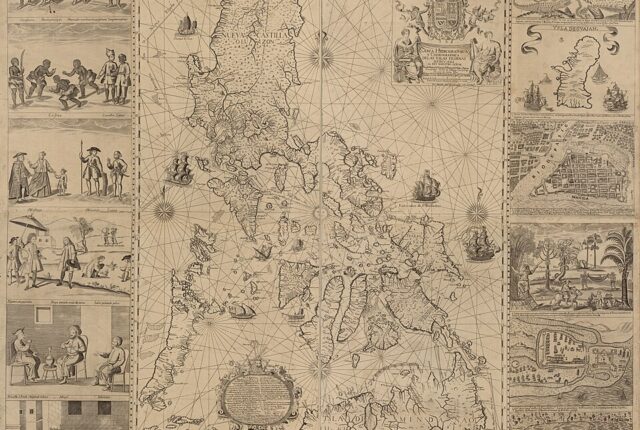
“Prints Across the Pacific/Estampas a través del Pacífico, 1565–1815” seeks to bring together early to mid-career print scholars based in Southeast Asia and Latin America, from various disciplinary and geographic specializations, to consider print as a key medium of transcultural exchange, communication, and technical innovation across the early modern Pacific, from ca. 1565 to 1815. The project will take place from autumn 2026 through summer 2028.
Led by Prof. Stephanie Porras (Tulane University) and Dr. Devin Fitzgerald (UCLA), the project seeks to bring together print scholars from all sides of the Pacific with different skill sets who are working within the academic, museum, library, and/or heritage fields. While the project time frame encompasses the years of the Spanish-controlled Manila Galleon linking Manila with Acapulco, the project includes work beyond the Iberian and/or Catholic missionary networks, including Indigenous histories from both sides of the Pacific, Dutch merchant depots in Taiwan and Japan, Fujian print publishers and their readers in Manila, as well as potential links to further maritime geographies such as the Indian Ocean. The ambition of “Prints Across the Pacific” is for participants to lay the foundation for a transregional field of art and book history that unites the Asia Pacific, Latin America, and Europe.
The project will bring together 12 to 15 participants for three travel seminars in Manila, Mexico City/Puebla, and Madrid/Rome, beginning in December 2026. Each seminar will be seven to ten days in length and will consist of reading discussions, presentations, and collaborative site visits to archives, libraries, and museum collections. In these seminars, participants will consider questions of print production, book and print markets, and the material histories of print across the early modern Pacific in conversation with local practitioners, archivists, librarians, curators, and scholars. Each seminar will enable local subject specialists to engage in dialogue with the group and will consider entangled production histories of select early modern print objects, laying the groundwork for future collaborative work. The seminars’ goal is to establish a network of print scholars capable of overcoming the methodological and linguistic divides that have prevented the integration of the Asia Pacific into broader global art and book histories.
Participants
Alejandro Julián Andrade Campos
Research Professor, Instituto de Ciencias Sociales y Humanidades “Alfonso Vélez Pliego,” Benemérita Universidad Autónoma de Puebla
Read bio
Alejandro Julián Andrade Campos is Research Professor at the Instituto de Ciencias Sociales y Humanidades Alfonso Vélez Pliego at the Benemérita Universidad Autónoma de Puebla (BUAP). He completed his master’s and doctoral degrees in Art History at the Universidad Nacional Autónoma de México (UNAM). His research focuses on pictorial production in Puebla during the viceregal era, the lives and practices of painters, artistic traditions, and the political and devotional significance of imagery.
Andrade Campos’s research focuses on the development of viceregal painting within the former Bishopric of Puebla. From this perspective, he is interested in analyzing the theoretical and visual tools artists employed to create their works—most notably the use of prints to emulate compositions originating from diverse regions. In particular, he wishes to delve into two accounts linking the Society of Jesus with the global use of prints. First, he will examine the 19th-century chronicles regarding the print shop established by Lorenzo Zendejas (father of the Puebla painter Miguel Jerónimo Zendejas); this venture was encouraged by the Jesuit Juan Antonio de Oviedo, who, while serving as the order’s procurator in Rome, urged Zendejas to purchase such items with the guidance of Jesuit fathers from across the globe, gathered there for the General Congregation. Second, he aims to trace the prints that adorned the walls of the Jesuit Colegio del Espíritu Santo in Puebla. These works are documented in detail in inventories drawn up following the Order’s expulsion, which record not only the subjects depicted but also the names of the artists who signed them. Through this study, Andrade Campos seeks to reconstruct a corpus of images promoted by the Order—images that formed part of the global visual repertoire consumed in Puebla during the first half of the 18th century.
Carlos Diego Arenas Pacheco
Profesor-Investigador (Associate Professor of Education), Escuela de Pedagogía, Universidad Panamericana, Mexico City
Read bio
Diego Arenas is Associate Professor of Education at the Escuela de Pedagogía, Universidad Panamericana in Mexico City. He holds a PhD in Medieval Studies from the Medieval Institute, University of Notre Dame. He specializes in the history of education, literature, and cultural exchange in the early modern Iberian world. His research examines colonial schooling, residential education, literacy, and the intellectual production of non-European students and writers across colonial Latin America, Africa, and Asia. His current projects include a monograph on education and literary culture in the early colonial Iberian world and articles on residential schools, pedagogy, Indigenous intellectual history, and the global circulation of educational texts and prints. He has received support from the Spencer Foundation, the John Carter Brown Library, the Newberry Library, and the Bibliographical Society of America.
Arenas’s research examines the role of education and literacy in the expansion of the early Iberian world. His current book project focuses on boarding schools for non-European students across Spanish and Portuguese territories between the late fifteenth and early seventeenth centuries. It compares institutions in Granada, Kongo, New Spain, Peru, Brazil, Goa, the Philippines, Macau, and Japan, among other regions, and asks how schooling contributed to religious conversion, colonial administration, the formation of new intellectual communities, and the creation of non-European intellectual texts. He examines how Indigenous and other non-European students read, translated, copied, printed, adapted, and contested the texts used in their education.
Transpacific print is central to this project. The circulation of books, images, paper, printing technologies, ideas, and scholars connected the Americas, Europe, and Asia in ways that cannot be understood if we limit ourselves to modern national boundaries. He is particularly interested in the movement of catechisms and catechistic forms, cartillas para enseñar a leer, devotional images, grammars, and literary texts between Mexico, Manila, Japan, Macau, and the Iberian Peninsula. The trace of print reveals how educational models were transferred and transformed through translation, local printing practices, Indigenous and Asian languages, and the participation of non-European printers, students, and authors.
Studying transpacific print allows Arenas to reconstruct education as a material and collaborative process. It also helps illuminate how printed objects created unexpected connections among Nahua, Filipino, Japanese, Chinese, and European intellectual worlds. The broader aim of this research is to show that colonial education and print culture were shaped by both imperial institutions and by the mobility, interpretation, and creative agency of the people who used printed texts.
José Araneda Riquelme
Postdoctoral researcher, Università degli studi Roma Tre
Read bio
José Araneda Riquelme is a postdoctoral fellow in the MISGLOB project, “Catholic Missions and the Global Circulation of People and Goods in the Early Modern Period (1500–1800),” at Roma Tre University. His research focuses on communication, agents, and the circulation of media between the Andes and Europe during the seventeenth century. He received his PhD in Early Modern History from the Scuola Normale Superiore in Pisa and an MA in History from the Pontificia Universidad Católica de Chile. He is also the co-host and co-producer of the podcast Las cosas tienen vida, together with Kate Mills (Kunsthistorisches Institut in Florenz).
Araneda Riquelme’s research reconstructs the career of Antonio Ricardo (circa 1540–1606), the first printer active in the Viceroyalty of Peru (1581-1606). It examines his work through three connected contexts: his formation in Venice and Lyon, his activity in Mexico City, and his career in Lima. Rather than treating Ricardo solely as a founding figure of Catholic colonial print, the project analyzes the commercial networks, visual models, and technical practices that enabled his press in an age of religious conflict. He focuses on Ricardo’s connections with printers Pedro Ocharte in Mexico and Guillaume Rovillé in Lyon, both persecuted by the Spanish Inquisition, to analyze material continuities between Europe, Mexico, and Peru. Ricardo also traveled to Lima from Acapulco on a ship that likely carried Asian artifacts and goods to the Andes in 1581. A central case is the visual transfer in the woodcuts’ style using these printers’ books. For instance, the portrait in Pedro de Oña’s Arauco domado, printed by Ricardo in Lima in 1596, employs techniques and conventions comparable to those in Rovillé’s Lyon editions of the Decameron, especially Pierre Eskrich’s portrait of Giovanni Boccaccio. This study helps trace the new movement of images, models, and artisanal knowledge across Atlantic and Pacific routes.
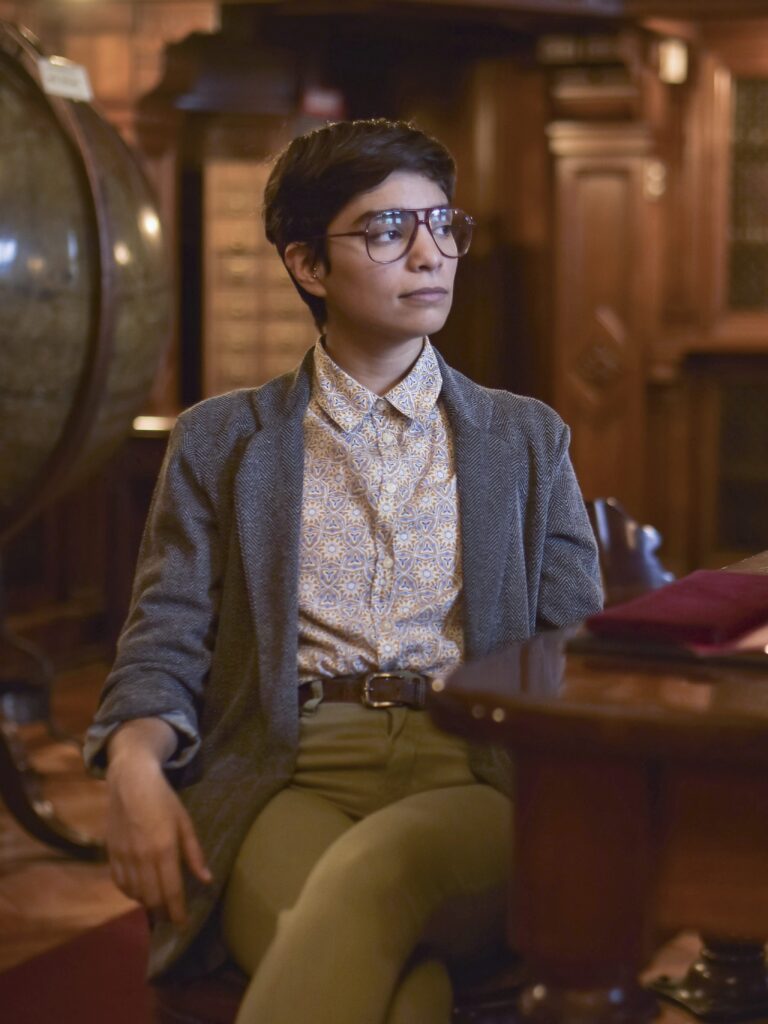
Javiera Barrientos
PhD Candidate English, Rutgers University
Read bio
Javiera Barrientos (Santiago, Chile) is a scholar in Early Modern literature and culture, bibliography, and the broader history of the book, as well as a bookbinder. She is currently completing her PhD in Literatures in English at Rutgers University where she is writing a dissertation entitled Literary Landfills. Transoceanic Histories of Bibliographic Waste in the Early Modern World. Through archival research and literary analysis, her project examines practices of bibliographic discard and paper recycling across European colonial networks. On the intersection of different time periods, geographies and languages, her work traces how colonialism and environmental extractivism have been mutually constitutive in shaping the economical, sociocultural and material ecosystem of the book. As a Graduate Fellow at the Rutgers Initiative for the Book, she manages their bibliographic Teaching Collection, teaches and develops pedagogical material for undergraduate courses, curates exhibitions, and leads workshops on bookmaking and material textuality. In recognition of her scholarship, she received the Bibliographical Society of America‘s D. F. McKenzie New Scholar Award in 2025 and is an Andrew W. Mellon Foundation Fellow.
Counter to the common belief that in the past books were considered invaluable commodities, early modern literature and material history reveal the resilience of sociocultural practices associated with a book’s disposal. Her research, Literary Landfills, traces the perception of books as waste back to early modern colonial societies to foreground their afterlives as discarded and repurposed objects. This focus illuminates the origins of their current depreciation and reframes the study of books as artifacts of wear and tear in societies shaped by imperial and colonial inequalities. It shows how competing notions of value, use and discard disrupt totalizing narratives that imagine global Northern metropoles as fully controlling the administration and material resources of their colonies. Pairing representations of unbound, torn, and reused books in early modern literature with material analysis of waste paper, bookbinding structures and paper pulp, this project challenges the reduction of books to tools for interpretation and cultural assimilation.
When research on bibliographic waste has focused on Anglo-European samples, Literary Landfills expands the field to colonial localities like Polynesia and South America incorporating the study of indigenous bark paper within creole bibliographies. This remapping emphasizes bibliographic waste as a relational and moving category which circulates among transoceanic circuits of intellectual and material trade decentering the Atlantic as the primary axis of print circulation and cultural exchange in the period. As an example, the first chapter “Arboreal Politics and Plant Paper in the Pacific,” traces the constituents of paper (linen rags and plants) as ‘useful waste’ in the wake of European Pacific expansion. Turning to John Taylor’s “The Praise of Hemp-Seed” and Thomas More’s Utopia, I track how imperial extraction transformed indigenous plant resources into repurposed bibliographical materials. This shift, characterized by Polynesian barkcloth sample books circulating in late eighteenth century France, destabilized European representational systems for understanding textual waste residues.
Juan Manuel Blanco Sosa
National Museum of History (Chapultepec Castle) / Instituto Nacional de Antropología e Historia (INAH)
Read bio
Originally from Puebla, Mexico, Juan Manuel Blanco Sosa holds a Bachelor’s degree in History from the Benemérita Universidad Autónoma de Puebla (BUAP) and Master’s and Doctoral degrees in Art History from the Universidad Nacional Autónoma de Mexico (UNAM) and the Universitat de Barcelona, respectively. Since 2011, he has served as a researcher at the National Museum of History (Chapultepec Castle) in Mexico City. His scholarly work focuses on Mexican numismatics, printmaking, and the religious heritage of colonial Mexico.
Blanco Sosa’s research focuses on the study of illustrations and engravings in books published in Puebla between 1765 and 1821. On the one hand, he examines the uses, intentions, and meanings attributed to images in books and popular printed materials; on the other, he explores the formal and artistic solutions employed by engravers in woodcuts and copperplate engravings as part of the visual language developed in the region. Finally, his work considers the engravers themselves: their relationships with printing presses and workshop practices, the commissions they received and the patrons who employed them, as well as recent historiographical research on their lives and careers.
As part of Prints across the Pacific, Blanco Sosa seeks to place these Puebla engravings within a broader context, situating them as part of the networks through which images circulated and were traded between kingdoms. In this way, studying across the Pacific can shed new light on these and other topics within a circuit that extends from the Philippines to Italy, allowing us to appreciate the convergence of different artistic traditions brought to printmaking.
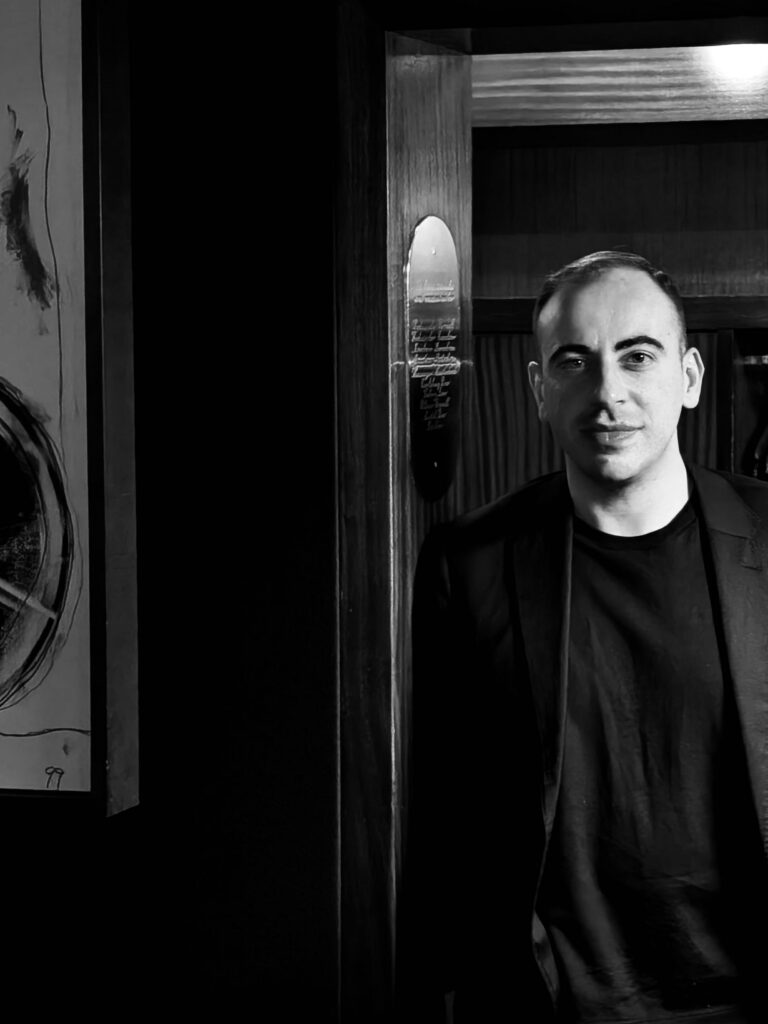
Dr. Antonio De Caro
Assistant Curator at Asian Civilisations Museum, Singapore
Read bio
Antonio De Caro (PhDs, Hong Kong Baptist University) is Assistant Curator at the Asian Civilisations Museum in Singapore, focusing on Southeast Asian collections, and Honorary Associate in the Department of History, SOAS, University of London. His research centers on the visual and material culture of Catholic missions in East and Southeast Asia, and the cross-cultural circulation of devotional imagery between Europe and China in the early modern period. He was previously a Postdoctoral Research Fellow at the University of Zürich and Resident Fellow at the Albuquerque Foundation. Earlier positions include postdoctoral fellowships at Masaryk University and the University of Turin and visiting fellowships at the University of Edinburgh and the University of Hong Kong. His work sits at the intersection of global art history, the history of Christianity in China, and the visual culture of early modern Catholic missions.
De Caro’s current research project examines images depicting the death of St. Francis Xavier, S.J. (1506–1552) on the island of Shangchuan, in present-day Guangdong province, China, at the borders of the Ming empire. Following the translation of the Saint’s body from Shangchuan to Goa, India, where it remains preserved, images of Xavier, including his vera effigies, circulated widely from Goa to Rome. After Xavier’s canonization in 1622 and the subsequent translation of the Saint’s right arm to the Chiesa del Gesù in Rome, Rome and Goa became even more central cultic centers, leaving Shangchuan, it would seem, in a comparatively marginal role. At the same time, images depicting Xavier’s death celebrated his fama sanctitatis and his buona morte (good death), casting Shangchuan as the ideal site where Xavier “earned” his sainthood. Devotional practice played a key role in the circulation of this iconography across Europe: from Rome to Lisbon, from Venice to Ljubljana, prints depicting Xavier’s death were also believed to carry miraculous, thaumaturgic power. These images traveled beyond Goa and Rome, eventually reaching the Chinese empire, where they were reframed within a different religious and artistic context. De Caro’s project traces the circulation of these images across the margins of various geographical regions, attending to the intricate web of interactions among the different actors who shaped the imagining of Xavier’s death.
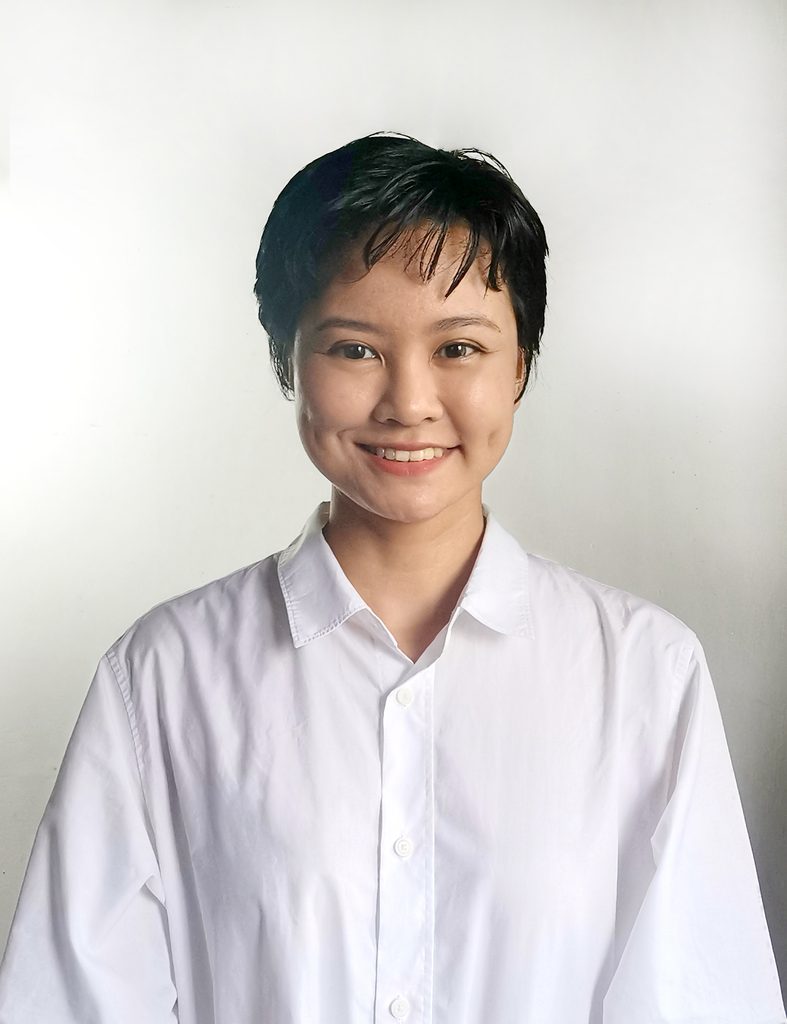
Carla T. Gamalinda
University of the Philippines, Cebu
Read bio
Gamalinda’s research focuses on the history of the three active Philippine presses of the early modern period through the study of graphic art elements like brevigraphs, capital letters and coats of arms. By treating these visual elements as material and historical evidence rather than just decorative features, I aim to reconstruct of aspects of the printing industry that are difficult to trace through documentary sources alone. Through an analysis of recurring designs used by local printers and engravers of the Philippines, imported from East Asia, Latin America and Europe, I have identified patterns and irregularities that prompt a reconsideration of previous claims about colonial-era publishing in the Philippines.
These smaller graphic components of printed books, which are often-overlooked, offer insights into workshop practices, production networks, and the book circulation. I am also reconstructing aspects of printing operations in the Jesuit press in Manila by comparing inventories of printing-office assets with evidence gathered from graphic art elements. I have used this approach to reassess claims regarding commercial connections between Philippine and Mexican printing industries.
As part of Prints Across the Pacific, Gamalinda’s research will expand to include materials from across Pacific. In this new phase, she hopes to articulate the similarities and distinctiveness of the local graphic style in comparison to its counterparts in Rome, Spain, and Mexico. At the same time, Gamalinda will investigate the processes involved in importing printing components used in Philippine presses from Mexico.
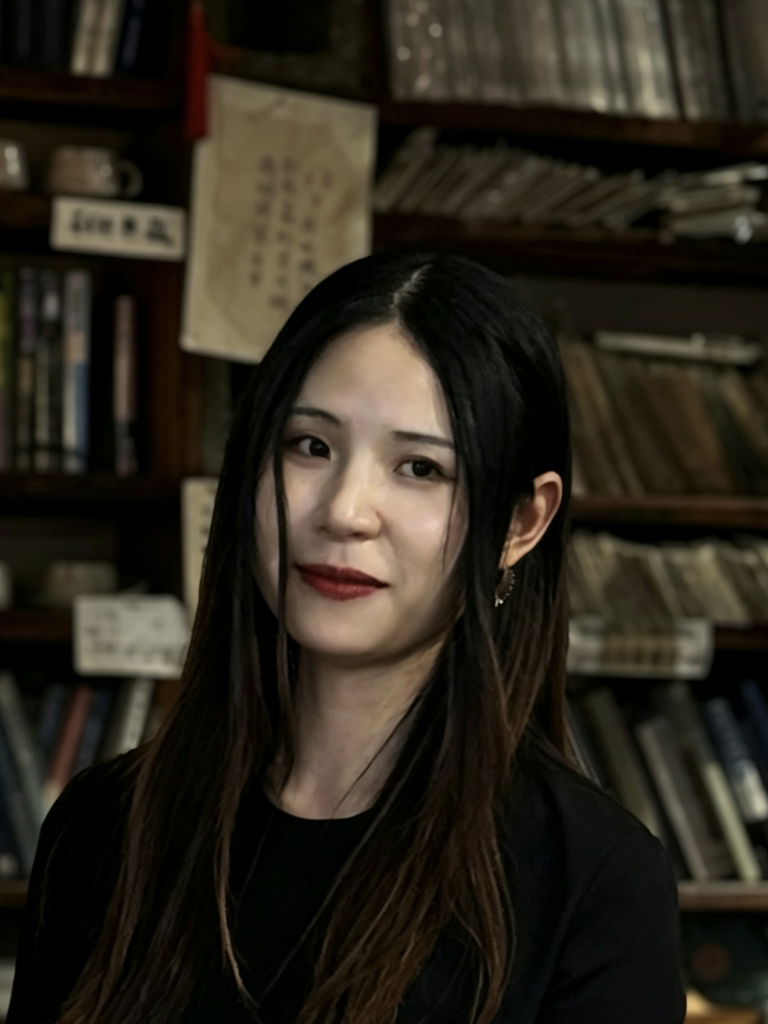
Xiaolu Li (李晓璐)
Assistant Professor, Guangzhou Academy of Fine Arts, China
Read bio
Xiaolu Li holds a Ph.D. from the Central Academy of Fine Arts, China, and currently serves as Assistant Professor at the Guangzhou Academy of Fine Arts. She has extensive overseas research experience, including appointments as Foreign Researcher at the Institute of Japanese Studies, Rikkyo University, Japan; Visiting Scholar at Silpakorn University, Thailand; and an upcoming Visiting Research Fellow at the Third World Studies Center, University of the Philippines Diliman. Her research interests cover diasporic Chinese art, transpacific and Iberian colonial art, Southeast Asian art history, and the transcultural history of art and knowledge circulation. She is the author of the forthcoming monograph The Metamorphoses of Adam and Eve: A Transcultural Art History of the “Couples and Customs” Ethnographic Schema (2027), which examines the global transcultural circulation and adaptive transformation of early modern European print schemas across East and Southeast Asian maritime networks.
Li’s research examines the bidirectional circulation of printed images and artistic knowledge across the early modern Pacific, centering the creative agency of artisans in transcultural visual exchanges. It comprises two interconnected research strands. The first is fully elaborated in her forthcoming monograph The Metamorphoses of Adam and Eve: A Transcultural Art History of “Couples and Customs” Ethnographic Schema (2027), which traces the dissemination of the Renaissance-originated “Couples and Customs” ethnographic print schema from the 16th to the 19th century across global maritime trade networks. Its opening chapter focuses on the late-sixteenth-century Boxer Codex, analyzing how Manila’s Chinese artisans creatively refashioned European and Chinese print conventions to visualize indigenous populations for Spanish colonial audiences. Comparing Japanese Nanban biombo, Siamese murals, and Qing tribute albums, this study demonstrates early modern prints as flexible transregional media negotiating colonial, mercantile, and religious dynamics, with localized East Asian adaptations later flowing back to Europe as Chinoiserie.
The second strand of her research is her ongoing project on diasporic Chinese painters in Southeast Asia (16th–19th centuries). It reconstructs their workshop lineages, guild structures, and adaptive visual strategies under diverse colonial, religious, and royal patronage, as well as their crucial practice as botanical illustrators for European naturalists. Drawing largely on southern Chinese local gazettes, genealogies, and indigenous archival materials, this study challenges the dominant one-way “Western commission, Eastern production” narrative and reveals reciprocal, multi-layered artistic exchange. Overall, Li’s research on transpacific print culture prioritizes the transcultural, transcontextual, and transmedial mobility of visual images.
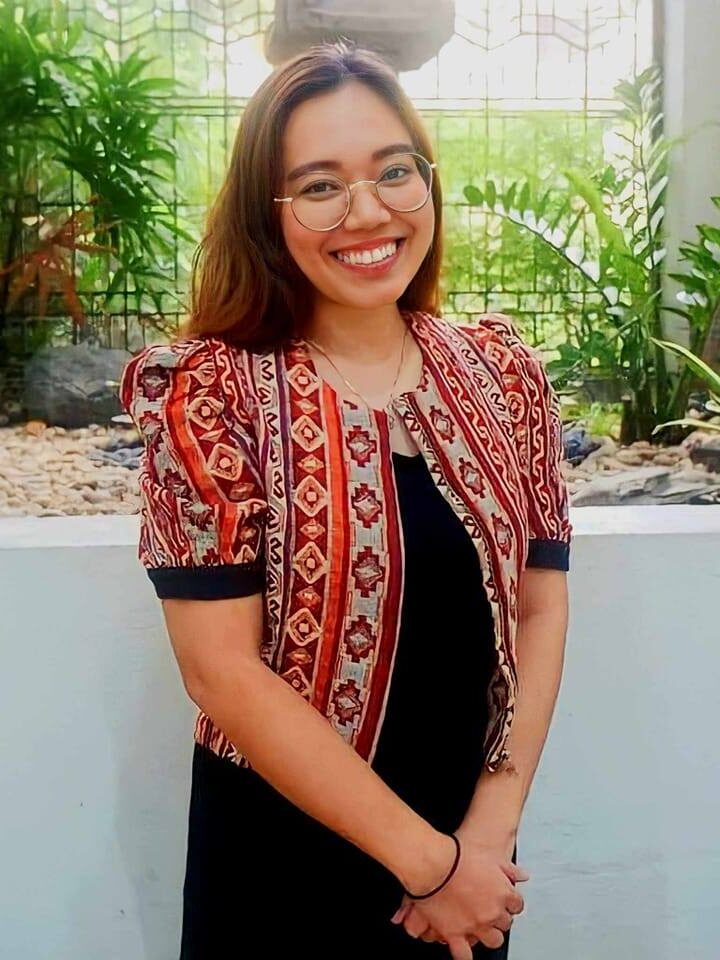
Mary Josefti C. Nito
Postdoctoral Fellow, Ecological History of Eurasian Art, University of Oslo, Norway
Read bio
Mary Josefti C. Nito is a post-doctoral research fellow at the Ecological History of Eurasian
Art (ECOART), Department of Philosophy, Classics, History of Art & Ideas, Faculty of
Humanities, University of Oslo (August 2026 – 2029). She is also an assistant professor of
the History Department of the University of Asia & the Pacific (on leave). She finished her
PhD in History from the University of the Philippines, Diliman with a dissertation about
Marian devotions in Luzon in the 17th and 18th century. Her publications and research projects
revolve around hagiographies, folk devotions, and local histories in the Philippines.
As part of her postdoctoral research post with the ECOART project, she will continue to work with these Marian icons in the Philippines but will be focusing on the Marian icons made of dark wood, made in the Philippines. As a participant in Prints Across the Pacific, she will enrich this research work by studying printed versions of these Marian icons, found in novenarios/prayerbooks, made in the Philippines, Europe and Latin America.
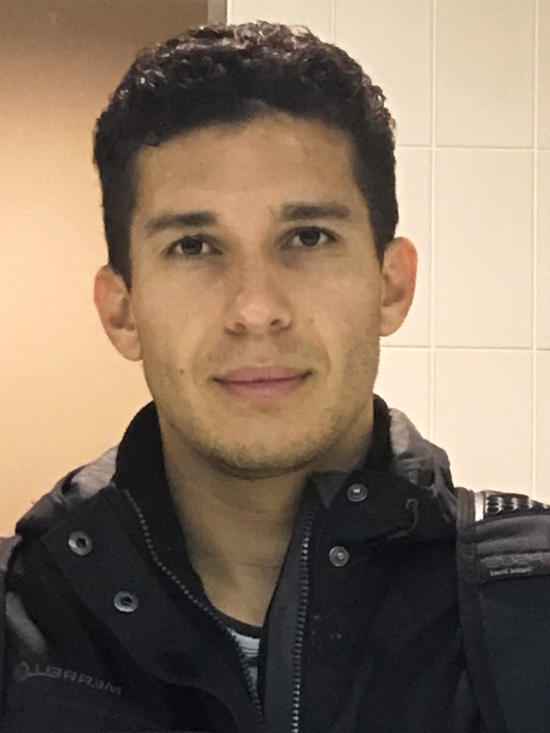
Joanes da Silva Rocha (ホッシャ・ジョアネス, 喬耐斯)
Postdoctoral Researcher, Center for Asian and Pacific Studies (CAPS), Seikei University, Japan
Read bio
Silva Rocha is a Postdoctoral Researcher at the Center for Asian and Pacific Studies (CAPS) at Seikei University, Tokyo, and holds a PhD in Architectural History from the University of Tokyo. His research examines the Iberian presence in East Asia (16th–19th centuries), with a particular focus on architecture, visual culture, and the circulation of knowledge across Europe and Asia. He has published articles and book chapters in architectural history, Japanese studies, and Sinology and has received the Mori Prize in Asian Studies (ASPAC/AAS) and the Fundação Oriente–Ambassador João de Deus Ramos Prize (Portugal). Silva Rocha has held visiting appointments and fellowships at leading research institutions in Asia, including the Institute of History and Philology at Academia Sinica (Taipei) and the National Institute for Advanced Humanistic Studies at Fudan University (Shanghai).
His research examines how visual, architectural, and printed knowledge circulated across the Pacific world between the sixteenth and eighteenth centuries, with particular attention to the interactions linking Iberia, East Asia, and the Americas. As an architectural historian, he investigates how images, maps, illustrated books, folding screens, and missionary publications functioned not only as artistic objects but also as vehicles for transmitting cultural, spatial, and intellectual knowledge across linguistic and political boundaries. His current work combines architectural history, visual culture, and digital humanities to reconstruct networks of exchange across the Pacific regions.
Silva Rocha’s interest in transpacific print stems from the recognition that printed and pictorial materials shaped how distant societies were imagined, interpreted, and represented. Rather than treating prints merely as illustrations, he views these objects as historical evidence embedded in broader processes of circulation, adaptation, and cultural translation.

Marlon James Sales
Associate Professor of Spanish and Translation Studies, University of the Philippines Diliman
Read bio
Sales is an Associate Professor of Spanish and Translation Studies at the University of the Philippines Diliman. He received his PhD from Monash University in Translation Studies, following an MA in Spanish Pedagogy from the University of Valladolid and a BA from the University of the Philippines. He has translated several books into Filipino, and has been a postdoctoral fellow in Critical Translation Studies at the University of Michigan and the Postdoctoral Fellow in Missionary Linguistics at the Center for the Historiography of Linguistics at the University of Leuven, Belgium.
Sales is currently working on a monograph with the provisional title of Migrant Texts, Multilingual Lives: Cultures of Translation in the Spanish Philippines. I am specifically keen to revisit translation as a metaphor for the production and circulation of colonial texts within the Spanish Philippines and the wider Spanish Pacific. My idea is that in addition to the usual conceptualization of translation as a mere transfer of signifiers between languages, a more critical view of translation as the circulation, fixing, and policing of knowledges through language can be deployed for analyzing for a wider array of translational processes that contributed to the formation of an early Hispanofilipino literary polysystem.
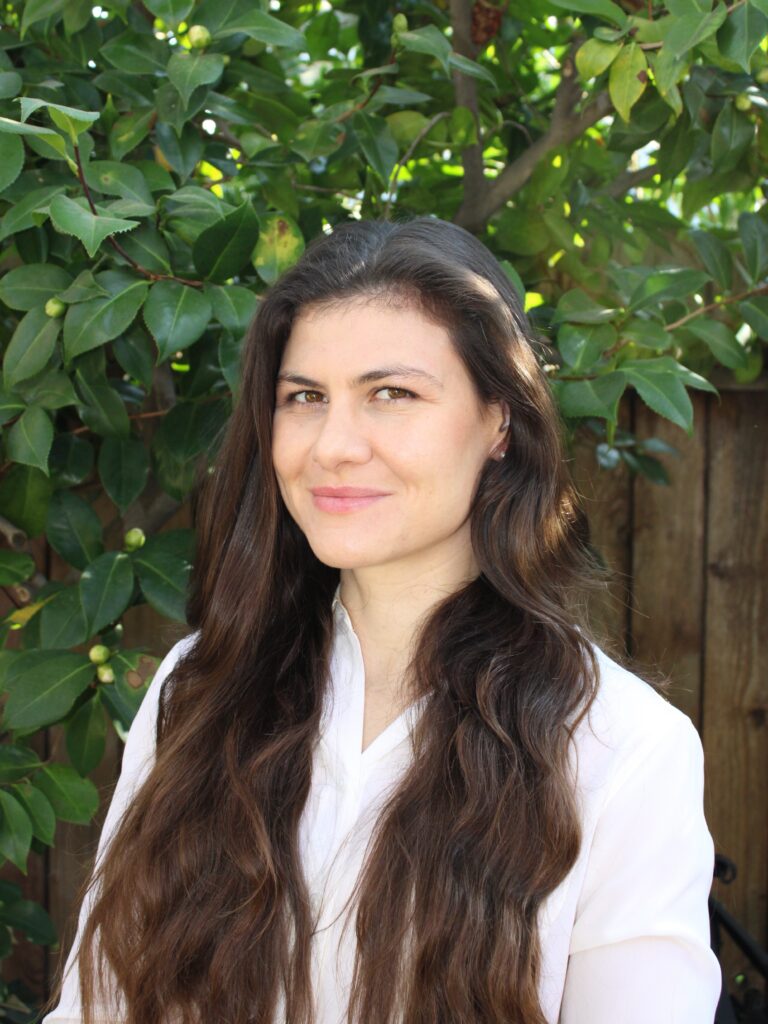
Kathryn Santner
Assistant Curator of Latin American Art, Denver Art Museum
Read bio
Kathryn Santner earned her PhD in the history of art from St. John’s College, University of Cambridge, in 2016. From 2022-2024 Mayer Center fellow at the Denver Art Museum, curating the exhibition Painting in the Andes, 1680-1780. She is now Assistant Curator at the Denver Art Museum.
Though a curator of Latin American art, Santner’s interest in the Philippines and transpacific exchange spans more than a decade. Her initial research focused on Manila’s lay religious institutions for women (beaterios) and the objects used to enhance their religious experience. That project was supported by the Leverhulme Trust, John Carter Brown Library, and Newberry Library. My graduate work on devotional objects brought me to my recent research on sangley silversmiths who supplied liturgical silver to churches and convents across the Philippine archipelago. A book chapter on these plateros appears in Transpacific Crossings: Art, Trade, and the Manila Galleon, co-edited with Karina Corrigan and Jorge Rivas-Pérez (Denver Art Museum, 2026).
Santner is particularly interested in the “reverse flow” of art objects from Latin America into the Philippines, including sarga paintings, liturgical silver, sculpture, and imprints and engravings. For years, the study of the transpacific has positioned Asia as a source of inspiration for Latin American decorative arts; her aim is to examine other avenues of exchange between Iberia, the Americas, and the Pacific world through the eminently mobile nature of print. Doing so will not only enhance our presentation of Denver’s collection but also support future research and exhibition projects.
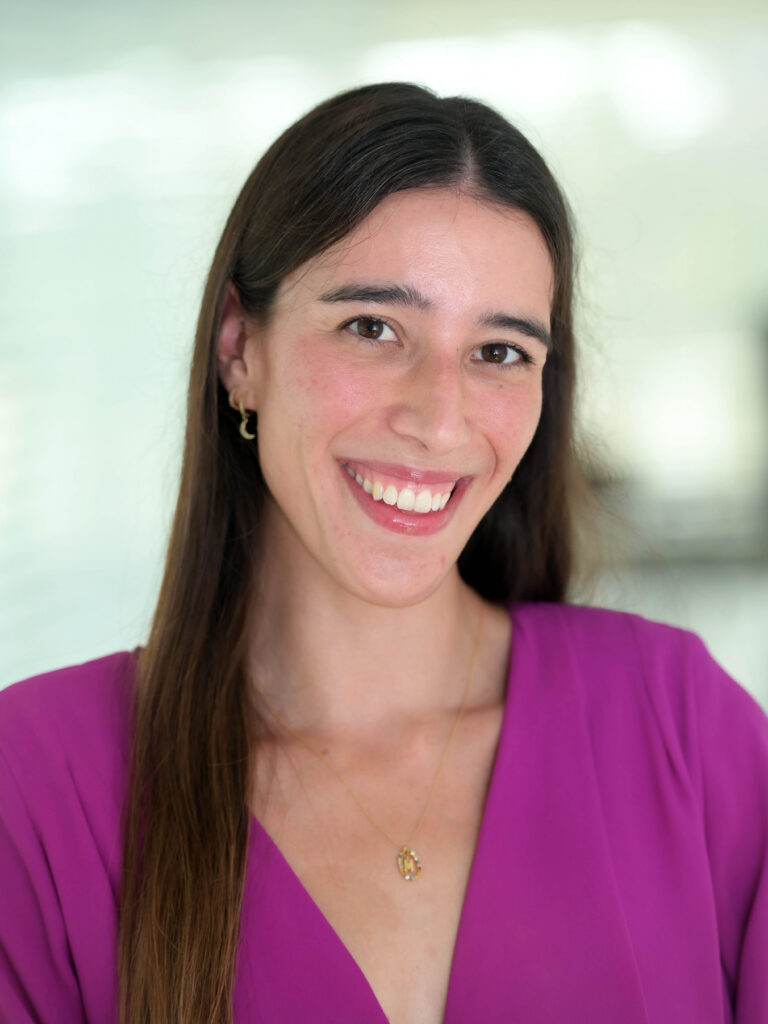
Maryluna Santos-Giraldo
PhD Candidate in Art History and Latin American Studies, Tulane University
Read bio
Maryluna Santos-Giraldo is a PhD Candidate at Tulane University. She holds an M.A. in Art History with Distinction from University College London, where her dissertation The Pan-optic Legacies of the Nation: An Approach to the National Museum of Colombia explored architecture and display as tools for shaping national narratives. She also earned an M.A. in Art History from Universidad de los Andes (Bogotá), with a thesis on the historiography of the Latin American Mudéjar, and a B.A. in History with a minor in Pedagogy from Universidad Católica Argentina (Buenos Aires). At Tulane, she has built an interdisciplinary trajectory that bridges art and architectural history, material science, and preservation studies. Alongside coursework in early modern architecture and Latin American visual culture, she has pursued classes in environmental sciences and completed a Graduate Certificate in Historic Preservation.
Santos Giraldo’s dissertation explores the architecture of the New Kingdom of Granada (roughly present-day Colombia) between the sixteenth and nineteenth centuries. Traditionally regarded as a peripheral territory, her research repositions the region as a center for the production of new building practices. Among these, she examines the environmental adaptations and formal transformations of early modern architectural treatises as they were reinterpreted in local contexts. Shaped by the collective expertise of builders, these innovations have often been overlooked by traditional scholarship, which has tended to subsume local variations under the broad labels of “Colonial” and “Mudéjar.” Her work reconsiders these labels by revealing how builders, materials, practices of making, and the circulation of architectural knowledge generated locally specific architectural traditions that were simultaneously embedded in broader global exchanges. She brings some of these questions to the study of not only the New Kingdom of Granada, but also to understand the more extensive connections within the Spanish Empire that were possible due to the overseas mobility of prints and people.
As part of Prints across the Pacific, she is interested in how both the territories of Nueva Granada and the Philippines received Sebastian Serlio’s architectural ideas via print, and constructed local variations of them, in response to El Niño variations. These conditions influenced the ways in which brick structures were originally protected from humidity and continue to pose challenges for their preservation today. In the long term, her goal is to contribute to a fuller understanding of how the so-called peripheries of the Spanish Empire were not marginal, but instead, dynamic sites of architectural knowledge production in constant transoceanic dialogue.

Ninel Valderrama Negrón
Assistant Professor, Spanish and Portuguese Department, University of Kansas
Read bio
Ninel Valderrama Negrón earned a B.A. in History and a Master’s in Art History from the Universidad Nacional Autónoma de México (UNAM). Her research expands Global Hispanophone Studies by accounting for Spain’s colonial history in Cuba and the Philippines. Studying the link between Latin America and Asia means working across geographical networks and questioning common assumptions about the chronology of nation-building in Latin America. Her publications reframe race relations, politics, and cultural production across the Americas and their diasporas. Examining communities that share the Pacific changes how race and identity are understood in former Spanish and Portuguese colonies. Combining archival research with digital humanities, she argues for the role of Asian and African diasporas in the formation of the Americas and for expanding current notions of race and mestizaje.
Valderrama’s contribution to the seminars will center on the routes connecting Central America with the Philippines. Scholarship has concentrated on Mexico, but Central America’s regular ties to the Philippines have been obscured by the region’s place within Mexico’s sphere. Two ports, Acajutla (El Salvador) and El Realejo (Nicaragua), served as clandestine points of contact with Asia. In 1773 the Philippines received xiquilite and añil (indigo) cultivation techniques from Guatemala and San Salvador. That circulation, among others, sits at the heart of her book manuscript, which centers on the military captaincies of the eighteenth and early nineteenth centuries (Central America, Cuba, the Philippines), territories where the captain general governed by decree rather than through the consultative mechanisms of viceregal rule. Its second chapter examines how European engravings were adapted into ephemeral architecture for royal coronations and civic celebrations across Central America, the Philippines, and Havana, from roughly 1762 to the 1820s. Here print functioned as a medium of communication and technical adaptation under the political pressure of the early nineteenth century, the point where local communities and Spanish ceremonial power converged. Prints across the Pacific would let me study these engravings more closely, test their circulation against collections in Manila, Mexico City, and Madrid, and contribute the Central American–Philippine axis to the field.

Niping Yan
Assistant Professor, History Department, University of Macau
Read bio
Niping Yan is Assistant Professor of History at the University of Macau. She received her PhD in History from the University of British Columbia in 2023. Trained in the history of early modern China and the Spanish Pacific, her research focuses on print culture and book history, the history of knowledge, migration, and material culture. She is currently completing her first book, Literate Strangers: Chinese Literacy and the Making of the Spanish Philippines, which grew out of her doctoral research on the Boxer Codex. Her article about the history of American cochineal in China appeared in the Journal of Global History (2025).
Following these materials across different languages and archives allows me to reconstruct the connected histories of print, migration, and knowledge that shaped the early modern Pacific. These questions are also what draw me to the study of transpacific print. She is interested in understanding how printed books and objects connected societies across the Pacific and generated new forms of knowledge through their circulation, with the hope of bringing Chinese-language materials into conversation with collections and scholarship from the Americas and Europe while contributing the perspective of late Ming Fujian’s commercial print culture to broader discussions of early modern global print history.
Project Team

Devin Fitzgerald
Curator of Global Book History and the History of Printing at UCLA Library Special Collections.
Read bio
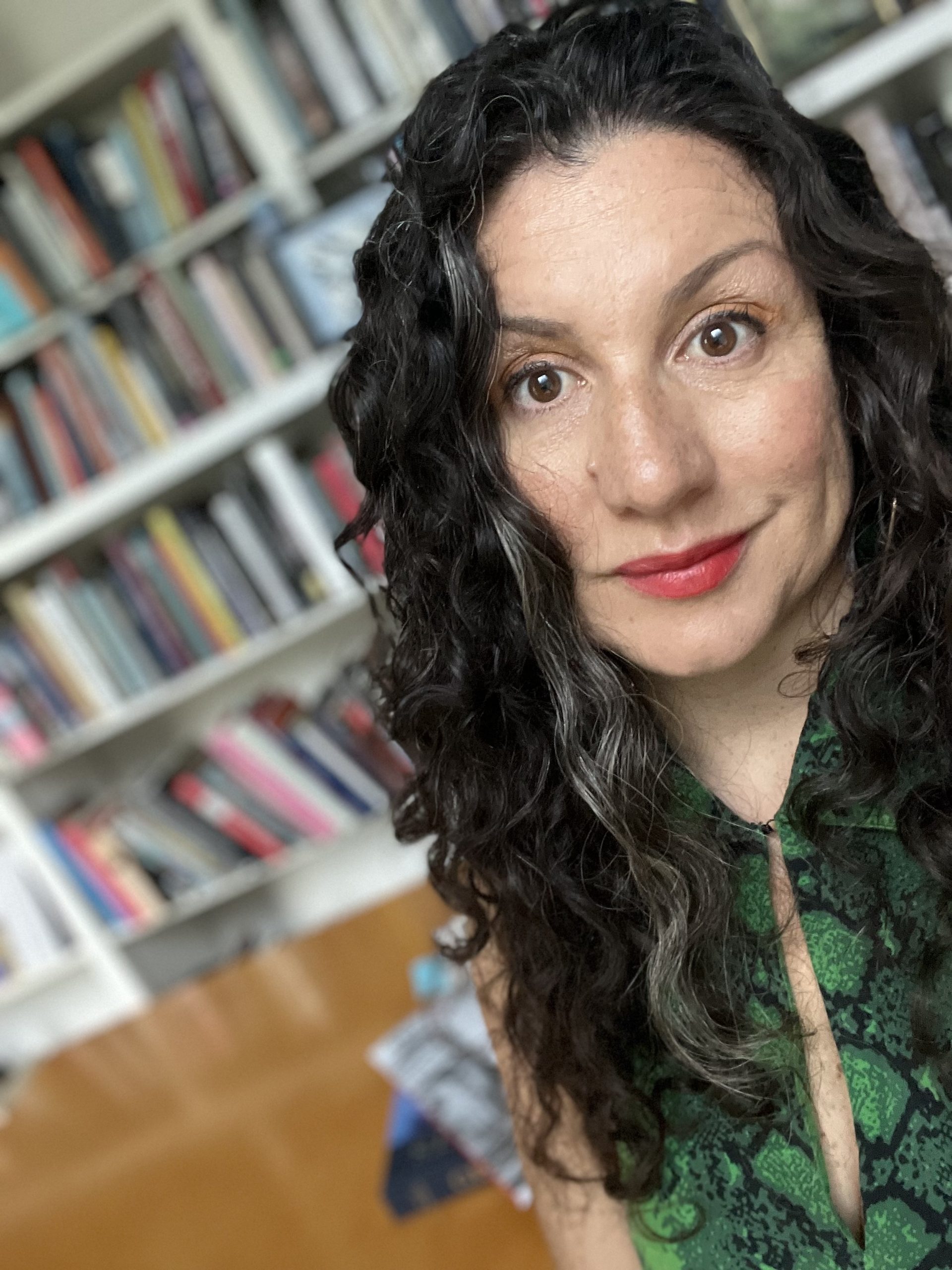
Stephanie Porras, Co-Principal Investigator
Professor of Art History, Tulane University
Read bio
Stephanie Porras is Professor of Art History at Tulane University in New Orleans. She is the author of Pieter Bruegel’s Historical Imagination (2016), Art of the Northern Renaissance: Courts, Commerce, Devotion (2018) and most recently, The First Viral Images: Maerten de Vos, Antwerp print and the early modern globe (2023). She is also the co-editor of numerous volumes, including the 2024 Routledge Companion to the Global Renaissance with Stephen Campbell and the 2025 Dutch Americas: art histories of the Atlantic world with Aaron Hyman. Her interest in the transpacific trade began with her scholarship on Philippine-made ivory carvings; she has begun a new research project, A Sea of Ink, which aims to explore how prints and printmakers originating from territories controlled and disputed by Ming/Qing, Habsburg, Tokugawa empires, as well as the Dutch commercial powers, came to shape the visual and material cultures of the South China Sea. Art history’s ‘global turn’ still primarily positions the South China Sea as a place known for the luxury export production, such as the porcelain and silk destined for European and American markets; or as a location subject to the missionary and/or commercial ambitions of European empires. A Sea of Ink recognizes the messy realities of this contested maritime sphere and proposes a methodological shift, exploring how disparate printed products of the South China Sea, made in multiple centers, using different print technologies and often drawing on immigrant labor, circumvented blockades and embargos to constitute a complex regional print culture.
Graduate Student Assistants
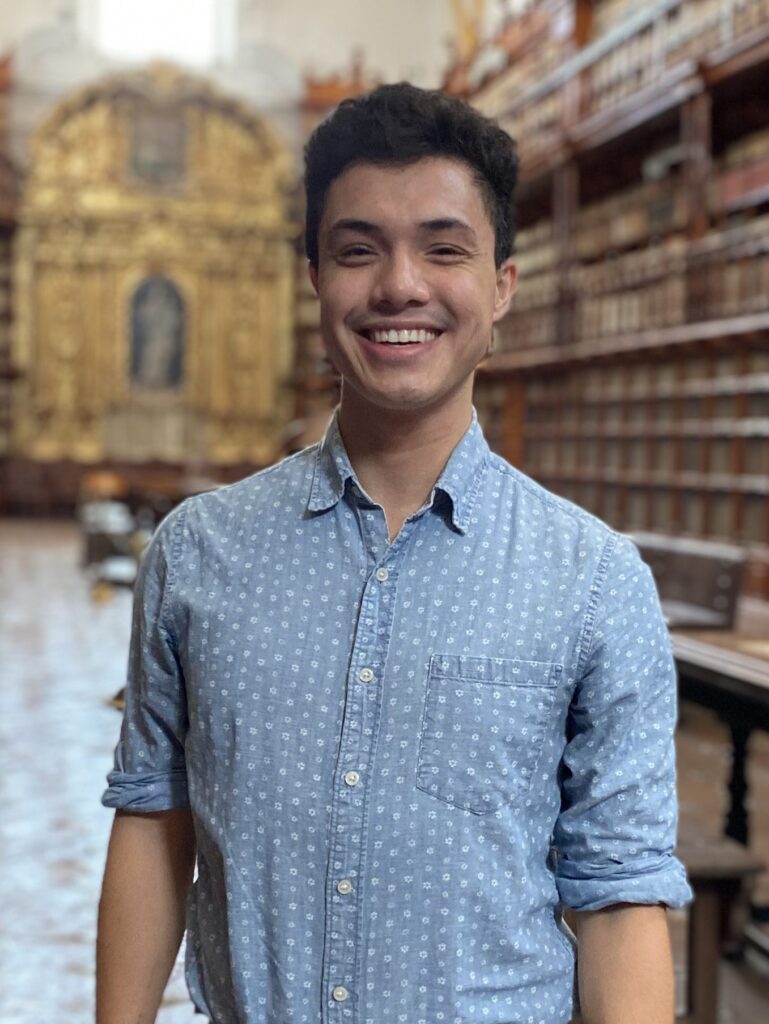
Chase Caldwell Smith
Read bio
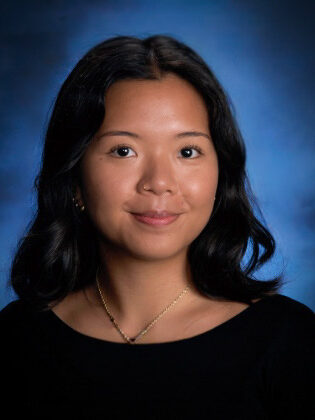
Claire Fontaina
MA candidate in Art History, Tulane
Read bio
Born in Manila, Philippines, Claire Justin Fontaina is an M.A. student in Art History at Tulane University. She studies colonial Philippine visual culture during the Spanish regime and its connections to New Spain. By investigating the Sangley production of retablos, she hopes to broaden the understanding of the mobility of material culture during Manila’s early modern Period. Claire was recently awarded the Publicly Engaged Scholar Fellowship by Tulane’s Center for Public Service. Through this fellowship, she aims to bring her work as an academic scholar back to her beloved community through a public arts program catered to the Filipino youth in the Chicagoland area. Claire earned her Bachelor of Arts in Art History and Spanish from Saint Louis University, Missouri.