The Fredi Chiappelli Memorial Fellowship is awarded to an outstanding UCLA graduate student from any academic discipline whose research focuses on any aspect of Italian studies between the third and the seventeenth century CE. The fellowship, named in honor of former CMRS-CEGS director Fredi Chiappelli, provides $30,000. Funding for student fees and other expenses must be provided by the recipient’s academic department or other sources. The Chiappelli fellowship is offered whenever sufficient funding is available from the endowment that supports the fellowship.
See the past recipients in the tabs below.
Jiakai Zhang (Classics)

Zhang’s project, Assimilating and Distancing: The Horatian Reception in Matteo Ricci’s Xiqin Qiyi (西琴曲意, Eight Songs for Western Keyboard), explores the reception of Horace in Ricci’s 1601 collection of Christian songs adapted for the Ming court. By situating the text within both Renaissance Italy and late Ming China, his project highlights how Ricci’s adaptations positioned Christian doctrine as both familiar and foreign across Chinese and Greco-Roman traditions, creating a dialogue between Horatian, Christian, and Neo-Confucian ideals.
Shane Black (Comparative Literature)
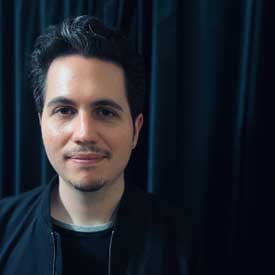
Shane’s project focuses on the reception of Latin epic poetry in the European medieval and early modern context, especially in the literature of English, Italian, and Neo-Latin languages. Of primary importance to the dissertation project is what he calls the “Mercurial figure,” an allegorical character enabled by classical reception, who combines features unique to the epic messenger to stage the process of reception itself. The dissertation, Mercurial Speech: Intervention and Lies in Early Modern Receptions of the Epic Mercury, addresses the process by which pre-modern writers appropriate, allegorize, and iterate on ancient representations of the Mercurial figure. His work considers the implications of using the god of lies as a mouthpiece for both the highest religious authority and the author, and he argues that the complex reception of the Mercurial figure gives rise to “Mercurial speech,” a discourse of authorship based on violence, lies, and improvisation, in which the instability of the author-figure is the primary feature of authorship. Ultimately, the simultaneous emergence of the discourses of Mercurial speech and humanism in the early modern period reveals that all political, religious, and literary authority in the modern world derives from the lie.
Campbell Garland (Art History)
Peter Weller (Art History)