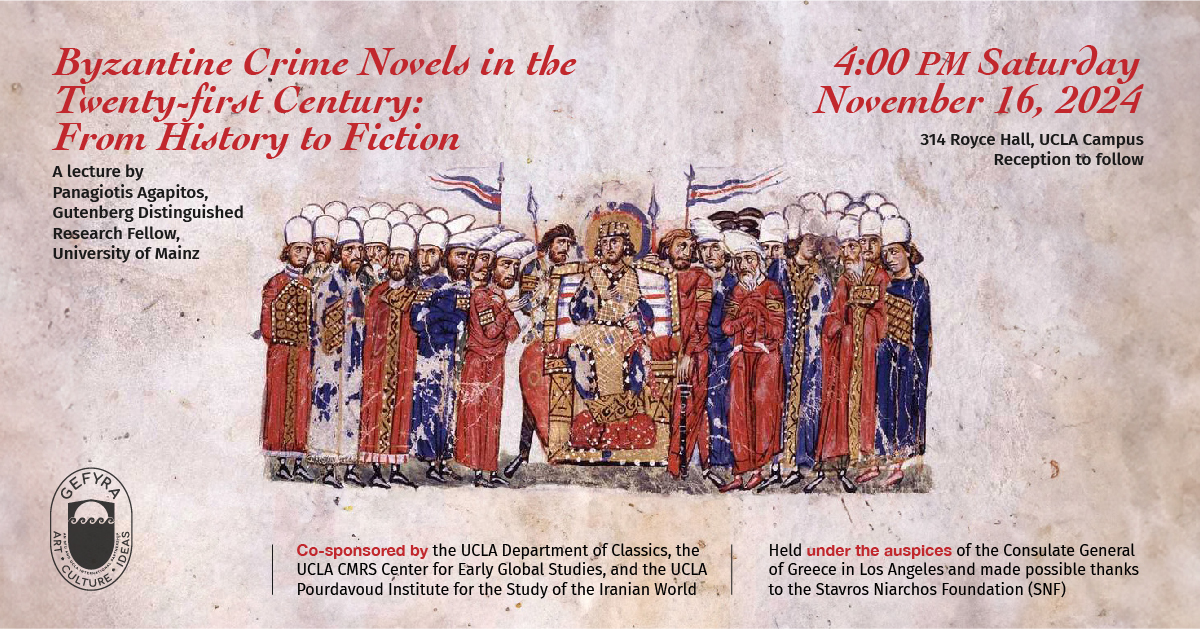
• Lecture by Panagiotis Agapitos, “Byzantine Crime Novels in the Twenty-first Century: From History to Fiction”

    This lecture tackles the question of “authenticity” when writing crime novels set in the remote past. Agapitos’ three novels (published between 2003 and 2009 in Greece), which are set in the first half of ninth-century Byzantium during the rule of the last iconoclast emperor, Theophilos (r. 829–842), form the basis of a lively discussion about […]
  • Medieval Texts Reading Group Winter 2024 Meeting

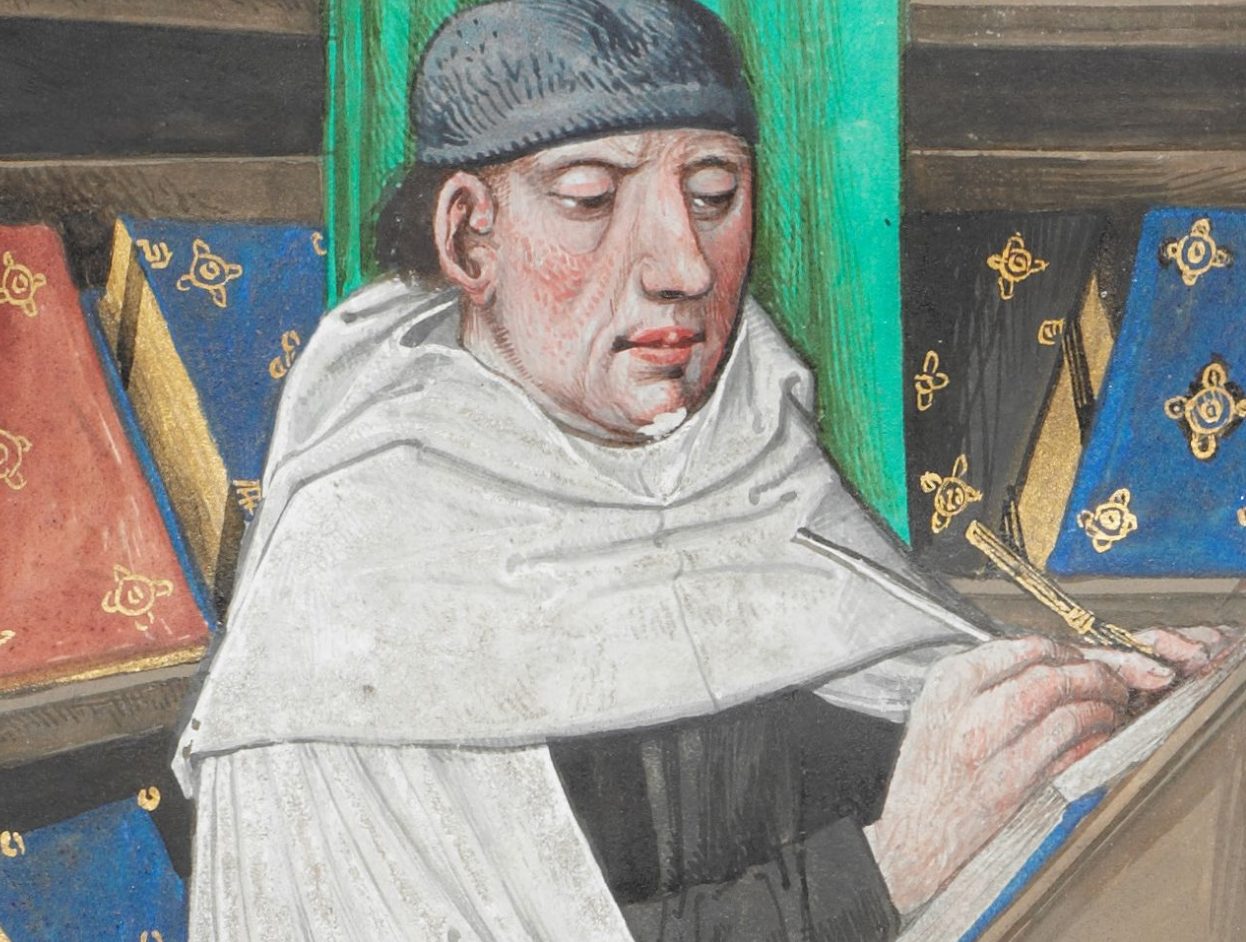
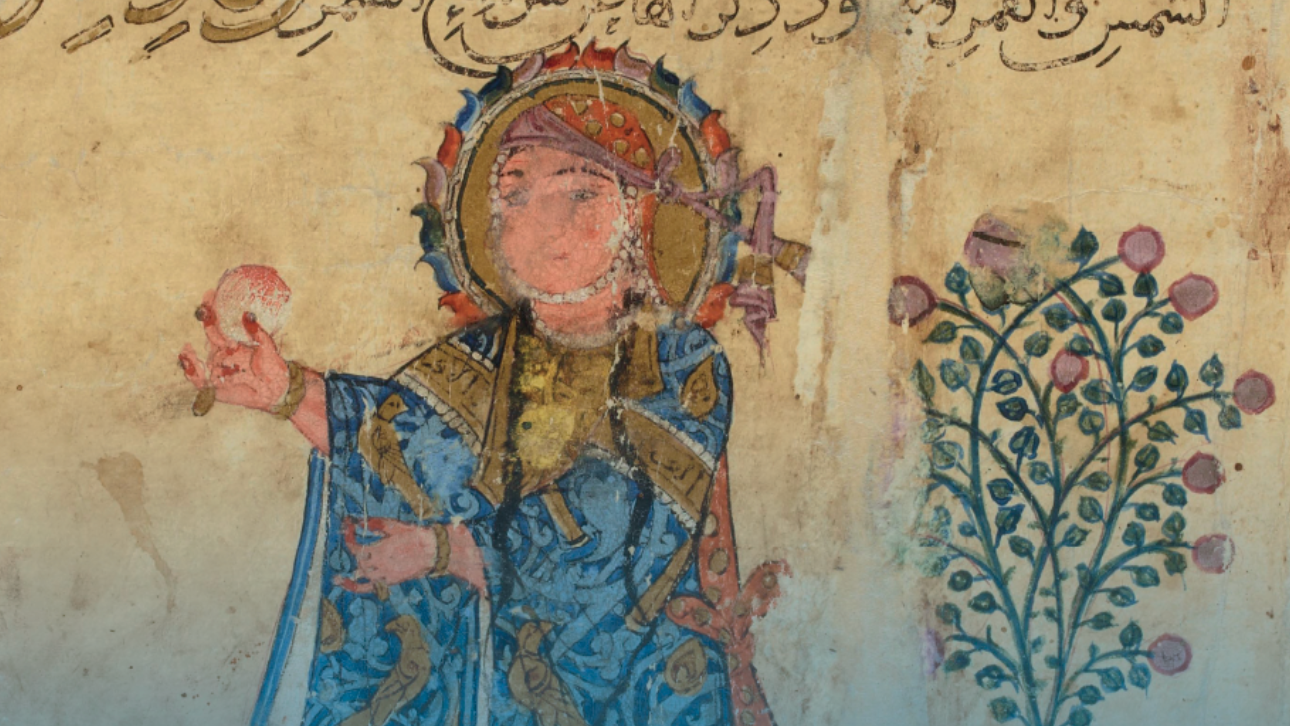
    The UCLA Medieval Texts Reading Group welcomes undergraduate students, graduate students, staff, and faculty interested in medieval literature. On the third Friday of each term, we get together to discuss a text in English translation from across the Global Middle Ages, to think about what it tells us about its cultural and literary context. Each discussion will be […]

  • Richard & Mary Rouse History of the Book Lecture by Kristina Richardson

    “Between Two Worlds: The Roma and Early Global Print Cultures” Guest Speaker: Kristina Richardson (University of Virginia) Richardson will show that Roma and other traveling people not only utilized block printing between 800 and 1450 in North Africa and West Asia but also introduced print technology in their new homes when they migrated to Central […]

  • “Lost in Transfer? Misunderstanding, Miscommunication, and the Production of Knowledge in the Late Medieval and Early Modern Mediterranean”

    Organizers: Stefania Tutino (UCLA), Andrea Aldo Robiglio (KU Leuven), and Eva Del Soldato (UPenn) The question of how knowledge transfers has become central for understanding the culture of the premodern world in a global perspective. This workshop is interested in exploring the question of what happens when transfer fails: what happens when knowledge is not […]

  • California Medieval Seminar (Winter 2025)

    Participation in the Seminar consists of group discussion of pre-circulated papers, typically drafts of articles, book chapters, or dissertation chapters (with complete apparatus). Two of the papers are ordinarily by emerging scholars (including PhD students) and the other two are by established scholars. We allocate one hour per paper and presenters should anticipate substantial, and […]

  • 24th Winter Workshop in Medieval and Early Modern Slavic Studies

    Presentations 9:00-9:10 Introductory remarks Gail Lenhoff (UCLA) 9:10-9:40 Carol Stevens (Colgate University) “Sexual Assault and Petrine Law: A Few Surprises” 9:40-10:10 Ann Kleimola (University of Nebraska) “Thoughts and Prayers: Russian-Lithuanian Negotiations about Prisoners of War after Orsha (1514)” 10:10-10:20 Break 10:20-10:50 David Prestel (MSU) “The Rus’ Primary Chronicle: Chronos, Kairos and the Complexities of Divine Providence” 10:50-11:20 […]

  • William and Lois Matthews Samuel Pepys Lecture by Carla Pestana

    Striving for Expertise Guest Speaker: Carla Pestana (UCLA) Scholars often refer to Samuel Pepys as an early example of a state bureaucrat, his career as a civil servant in the burgeoning Restoration bureaucracy offering documentation of an important shift in governance. Of equal note—and perhaps greater interest—is the way Pepys himself aimed for expertise. Not […]

  • New Book Salon, “Dante, Moses and the Book of Islam. Visualizing the Qur’an from Byzantium to Filippino Lippi’s Adoration of the Golden Calf”

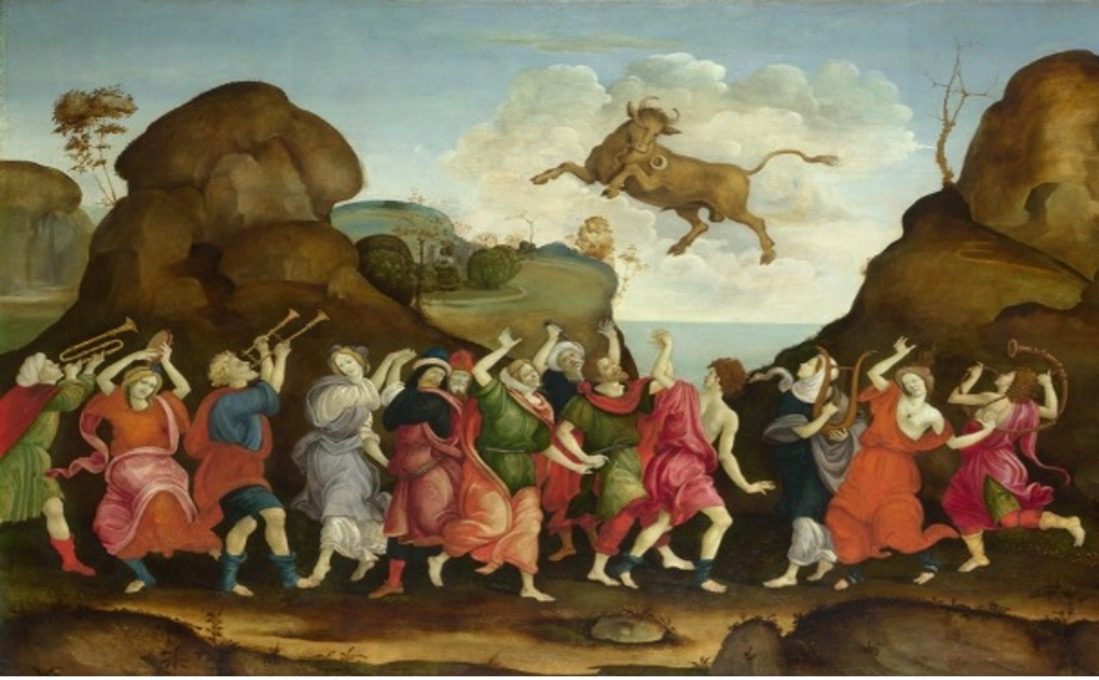
    What does a flying bull with a half moon on its belly in Filippino Lippi’s 1502 painting, the Adoration of the Golden Calf, have in common with Muhammad, as a character of Dante’s Comedy? This is the question that Roberta Morosini tries to answer by following the journey of a legend traveling in the Oriental […]

  • “Hybridity”: In-Between People, Texts & Objects Across the Early Global World – MEMSA Graduate Student Conference

    The 5th Annual Conference of the UCLA Medieval and Early Modern Student Association seeks to highlight the innovative work of graduate students on the manifold ways people, texts, and objects “in-between” shaped the early global world, from the early medieval to the late early modern periods. Presentations will engage with the concept of the so-called “hybrid,” asking: […]